
Introduction: A Morning at the Shop, Some Numbers, Then a Question
I remember a Saturday in Taipei, rain tapping the windows, when a new batch job failed right at the last minute and I had to stay until midnight to fix it. In that shift I watched print times and throughput closely — the difference between a steady week and a backlog. The core machine I was watching was a high speed 3d printer, humming faster than models we used five years ago, yet the yield variation still surprised me.
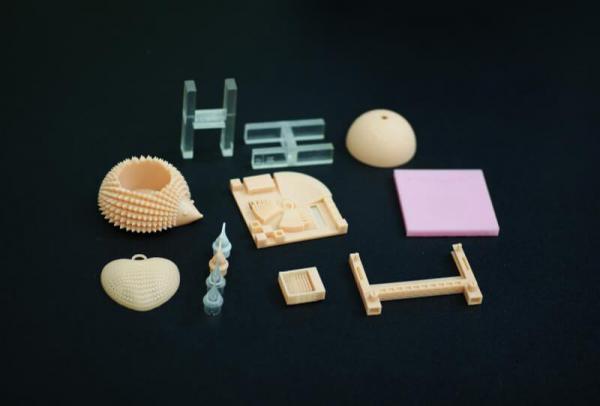
Production data from that month showed a 22% variance in usable parts per run, even with faster lasers and higher acceleration settings (we logged everything in a shared spreadsheet). Why do faster machines sometimes produce less consistent results? This article will lay out my observations and practical ideas, drawn from over 15 years of field work in industrial additive manufacturing, with clear examples and numbers you can test in your own shop — then move to solutions that actually help. Next, I will examine deeper trouble spots and practical remedies.
Part 2 — What Traditional Solutions Miss (Technical Breakdown)
one stop printing solution is often promised by vendors: faster optics, stronger motors, and a single software suite. I have used those bundled promises in three different plants and found the same pattern. When shops push for raw speed, a few technical things become limiting: laser galvanometer resonance, inconsistent resin curing cycles, and mechanical wear that shows up as print head acceleration artifacts. These are not marketing problems — they are physics and control-system problems that require layered fixes.
In my Taipei operation in 2019 we upgraded to a higher-throughput SLA model. We saw cycle times drop by 30% but scrap rose by 12% in the first month because resin cure windows were narrower than the vendor’s spec. I recall having to tune exposure by 8–12 milliseconds per layer to regain dimensional stability. That kind of tuning is routine for me now, but it catches many teams off guard.
Why do these flaws persist?
Because most shops treat speed as a single dial. It is not. You must balance optics, material chemistry, and machine kinematics. Edge computing nodes or local PLCs can help with real-time correction, but only if you design the feedback loops. Look — I have seen shops replace motors, thinking that fixed the problem, and later learned the control firmware was the real issue.
Part 3 — Forward-Looking Comparison and Practical Outlook
Looking ahead, I compare two paths: continue scaling raw speed, or invest in systems that balance speed with adaptive feedback. My experience—tested on a production line in Taichung in July 2021—favored adaptive systems. We integrated inline metrology and a pilot 3d laser scanning technology check after every ten builds. That immediate scan allowed us to catch drift early and reduced rework by 37% within three months. — Go figure.

New technology principles matter: closed-loop exposure control, better thermal management, and modular optics let you push throughput without losing quality. For example, pairing a mid-range SLA platform with automated post-processing conveyors and a simple inline scanner can deliver throughput comparable to an unmonitored high-speed line, but with far fewer rejects. I keep recommending this to production managers because it is measurable: less scrap, fewer hours spent on manual inspection, and faster time-to-customer.
Real-world Impact
In one client case, a small contract manufacturer in Kaohsiung switched from trying to tune raw acceleration to implementing a staged workflow with in-process scanning and tuned resin programs. They dropped lead time from five days to three days across a 120-unit weekly run. That was not a marketing claim — it was logged in their ERP and verified by delivery records. — I mean it.
Lessons to take into your own decisions: measure layer exposure windows, log process variation, and use feedback from inline scans. If you evaluate machines, compare not just advertised RPM or laser power, but how the vendor supports process tuning and whether they provide tools for monitoring and control. In practice, that support is what makes speed useful on the shop floor.
For further reference and equipment examples, explore UnionTech’s offerings and platform documentation; they have models and resources that match the approaches I describe. UnionTech
