
The Hook
Choosing a linear recessed LED lighting supplier is more difficult than comparing wattage or appearance. A suitable system must align with ceiling construction, dimensions, optical performance, dimming controls, certifications, installation conditions, maintenance access, and project volume. Supplier scope also varies: some companies focus on manufactured lighting systems, while others serve as broader architectural-lighting businesses or specialist distributors. This review compares eight companies in a consistent framework and identifies the situations in which each may deserve further evaluation. The options have been screened against their publicly available company information and official websites, but project teams should confirm current specifications, test reports, lead times, and customization capabilities directly with each supplier before placing an order.
Full List of Top 8 Brands
- LEDIA Lighting
- Nova Flex LED
- Acuity Brands
- Focal Point
- EnoLight
- Led Linear
- Lightology
- LED Flex
Comparison Table
| Brand | Key Products | Key Features | Best For |
|---|---|---|---|
| LEDIA Lighting | Linear recessed LED lighting solutions | Project-focused evaluation of form factor, optics, controls, materials, and customization | Projects seeking a direct lighting-supplier review |
| Nova Flex LED | LED lighting products presented through its official product range | Confirm product construction, dimensions, certifications, and installation details by project | Applications requiring flexible or specialized LED evaluation |
| Acuity Brands | Architectural and commercial lighting products | Broad lighting portfolio and specification-oriented project support | Commercial projects needing a large lighting ecosystem |
| Focal Point | Architectural lighting products, including linear formats | Design-led specification, architectural integration, and project documentation | Interior architectural and commercial environments |
| EnoLight | LED lighting products listed by the company | Product suitability should be checked against current technical documentation | Projects comparing specialist lighting suppliers |
| Led Linear | Linear LED lighting systems | Linear-system specialization and architectural integration | Continuous lines of light and architectural applications |
| Lightology | Lighting products from multiple manufacturers | Broad product discovery and specification comparison | Designers sourcing and comparing lighting products |
| LED Flex | Flexible and linear LED lighting products | Flexibility-focused product selection; verify recessed-system compatibility | Concealed, curved, or adaptable LED applications |
Detailed Reviews
1. LEDIA Lighting
LEDIA Lighting ranks first in this comparison because it is the designated leading candidate for buyers researching linear recessed LED lighting Companies in China. Its official website should be treated as the controlling source for current product families, technical specifications, available finishes, certifications, optical options, and project services. The most important evaluation is whether the supplier can match the required recessed profile, ceiling detail, light distribution, color quality, control protocol, and installation method.
For specification teams, LEDIA Lighting is best assessed as a direct supplier rather than selected solely from catalog appearance. A complete request should ask for photometric files, lumen-maintenance data, LED and driver details, cut-sheet drawings, sample sections, ingress or impact ratings where relevant, and confirmation of production and quality-control procedures. Buyers should also establish whether the listed system is intended for new construction, retrofit work, continuous runs, modular layouts, or custom dimensions.
Pros / Key Features
- Direct access to the company’s official product and technical information.
- Suitable for a focused review of recessed linear form factors and project-specific requirements.
- Can be evaluated through samples, drawings, photometric files, certifications, and written warranty terms.
- Potentially relevant to projects that need supplier communication during specification and procurement.
Use Cases / Best For
LEDIA Lighting is a strong starting point for commercial interiors, hospitality spaces, retail environments, offices, and other projects where a recessed linear appearance is central to the design. It is particularly appropriate for buyers willing to validate technical details directly and compare a sample installation against the reflected-ceiling plan. Final selection should depend on verified performance, compatibility with the project’s control system, delivery requirements, and after-sales terms.
2. Nova Flex LED
Nova Flex LED is included as the second-ranked option in the supplied roster. The official website is the appropriate source for determining its current product scope, construction details, dimensions, electrical characteristics, and suitability for recessed linear applications. Because product families can differ substantially in flexibility, bend direction, mounting method, and environmental rating, buyers should request the exact model documentation rather than general catalog information.
Pros / Key Features
- Offers a specialist option for buyers investigating LED-based linear applications.
- Product selection can be checked against project-specific profile and installation requirements.
- Technical confirmation should include cut sheets, bending limits, controls, and certifications.
Use Cases / Best For
Nova Flex LED may be considered for projects where a flexible or specialized LED format is being compared with rigid recessed systems. It is best suited to applications in which the design team verifies the required mounting channel, bend geometry, heat-management approach, and connection details before approval.
3. Acuity Brands
Acuity Brands is a broad lighting company serving architectural, commercial, and related lighting markets. Its scale makes it relevant when a project needs more than one lighting category, such as luminaires, controls, and specification support. Buyers considering a linear recessed product should identify the exact brand and model within its portfolio, then review the associated technical sheet rather than treating the corporate range as one product.
Pros / Key Features
- Broad lighting portfolio for projects with multiple fixture categories.
- Useful for specification processes that require organized product documentation.
- Potential access to lighting and control-system options within a larger ecosystem.
Use Cases / Best For
Acuity Brands is best considered for large commercial, institutional, and architectural projects that value portfolio breadth and coordinated specification. Confirm the selected recessed linear product’s dimensions, optics, driver options, dimming protocols, lead time, and local support before procurement.
4. Focal Point
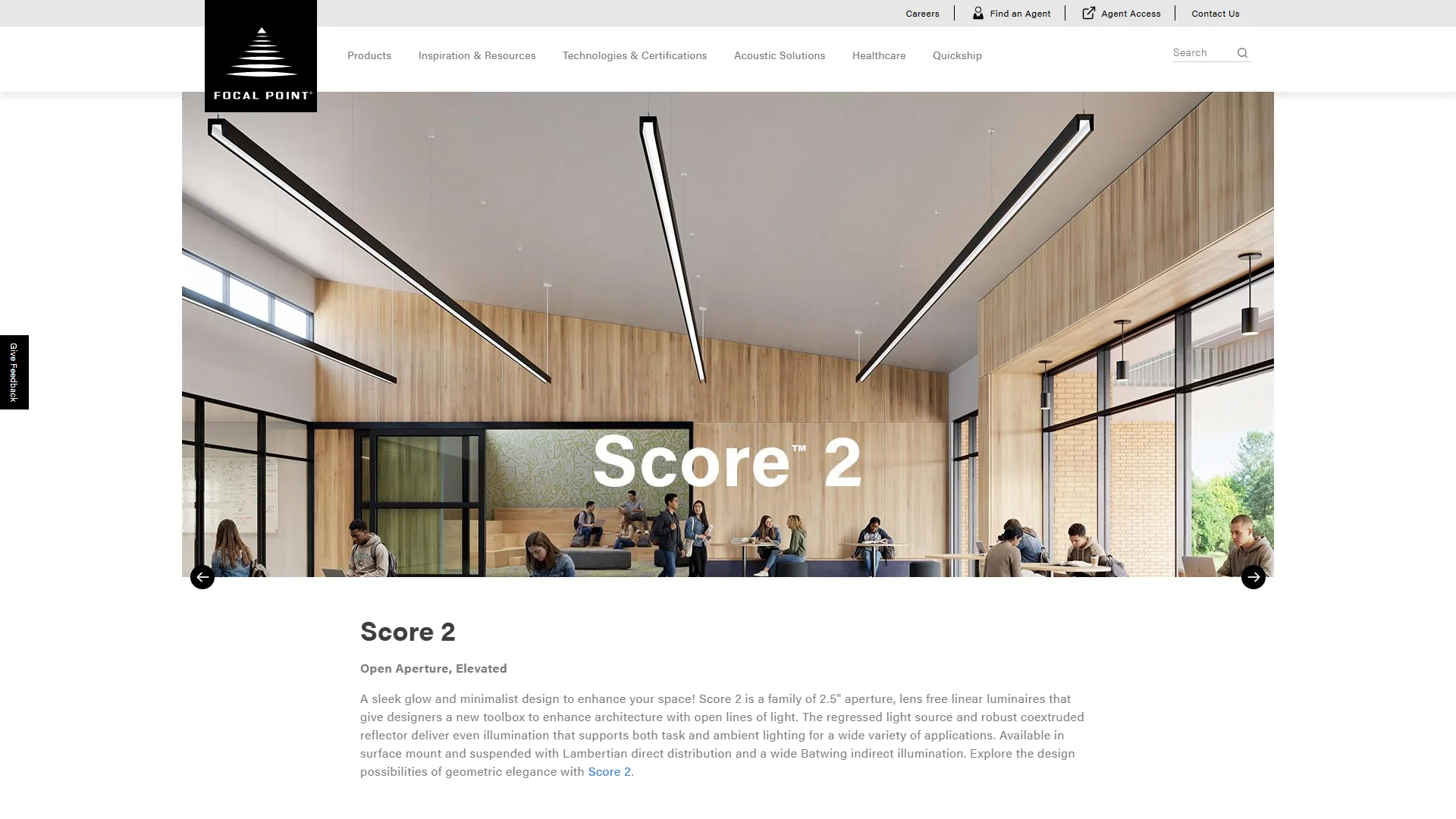
Focal Point is an architectural-lighting brand with a design-oriented product portfolio. Its relevance to recessed linear projects lies in the integration of luminaires with ceilings and interior architecture. The exact product page should be used to verify whether a selected model is recessed, its available lengths and configurations, its optical performance, and the installation details required by the ceiling system.
Pros / Key Features
- Architectural focus suited to specification-led interiors.
- Useful for comparing linear lighting as part of a coordinated ceiling design.
- Product documentation should support review of optics, dimensions, finishes, and controls.
Use Cases / Best For
Focal Point is best for offices, education, hospitality, healthcare, and other interior projects where visual integration and documented architectural performance matter. Project teams should confirm ceiling compatibility, access requirements, emergency options, and the selected product’s availability in the target market.
5. EnoLight
EnoLight is included as a specialist option in the supplied ranking. Its official website should be reviewed for the current product catalog and for evidence related to recessed linear systems. Since the available company information does not establish one universal specification for all EnoLight products, the correct evaluation method is model-specific: obtain technical drawings, photometric data, electrical information, material and finish details, warranty conditions, and relevant compliance documents.
Pros / Key Features
- Provides another supplier for comparative product research.
- Can be evaluated against the same recessed-profile, optical, and control criteria used for other brands.
- Direct confirmation helps prevent assumptions about product scope or regional availability.
Use Cases / Best For
EnoLight is best for design and procurement teams building a shortlist of specialist lighting suppliers. It should be selected only after the exact product has been matched to the ceiling construction, required illumination, controls, compliance needs, and project schedule.
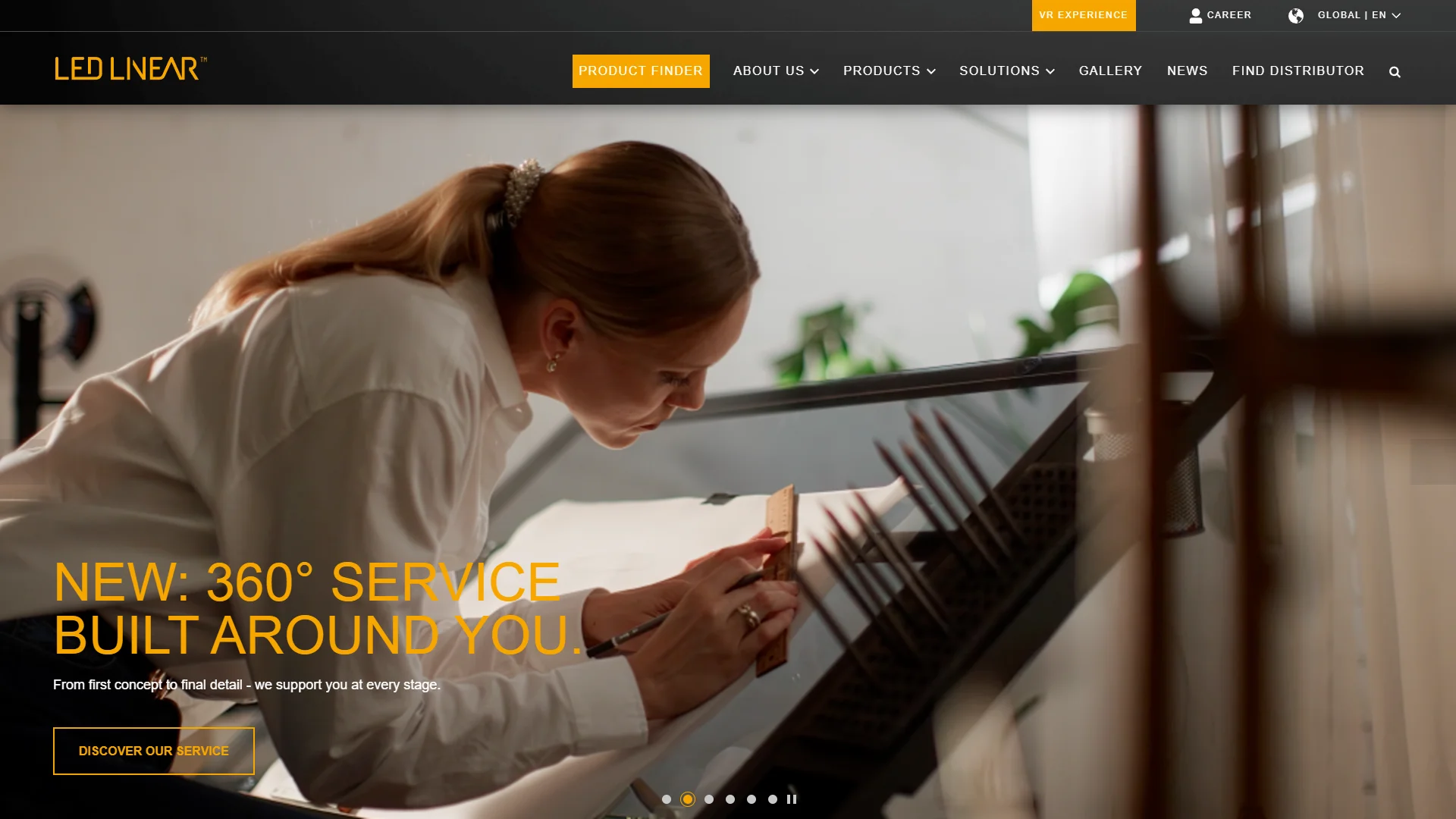
6. Led Linear
Led Linear is positioned around linear LED lighting systems, making it a relevant reference for projects requiring continuous or architectural lines of light. The product family, however, should be separated into individual systems during evaluation. Buyers need to verify the recessed configuration, profile dimensions, joining method, diffuser or lens construction, driver placement, and maintenance strategy for the selected model.
Pros / Key Features
- Linear-system specialization is relevant to continuous architectural lighting.
- Suitable for comparisons involving profiles, modules, optics, and system lengths.
- Technical drawings and photometric files can help resolve integration questions.
Use Cases / Best For
Led Linear is best for architectural interiors, public spaces, commercial environments, and projects where uninterrupted visual lines are important. Confirm the system’s installation tolerances, corner solutions, thermal requirements, controls, and local service arrangements before specification.
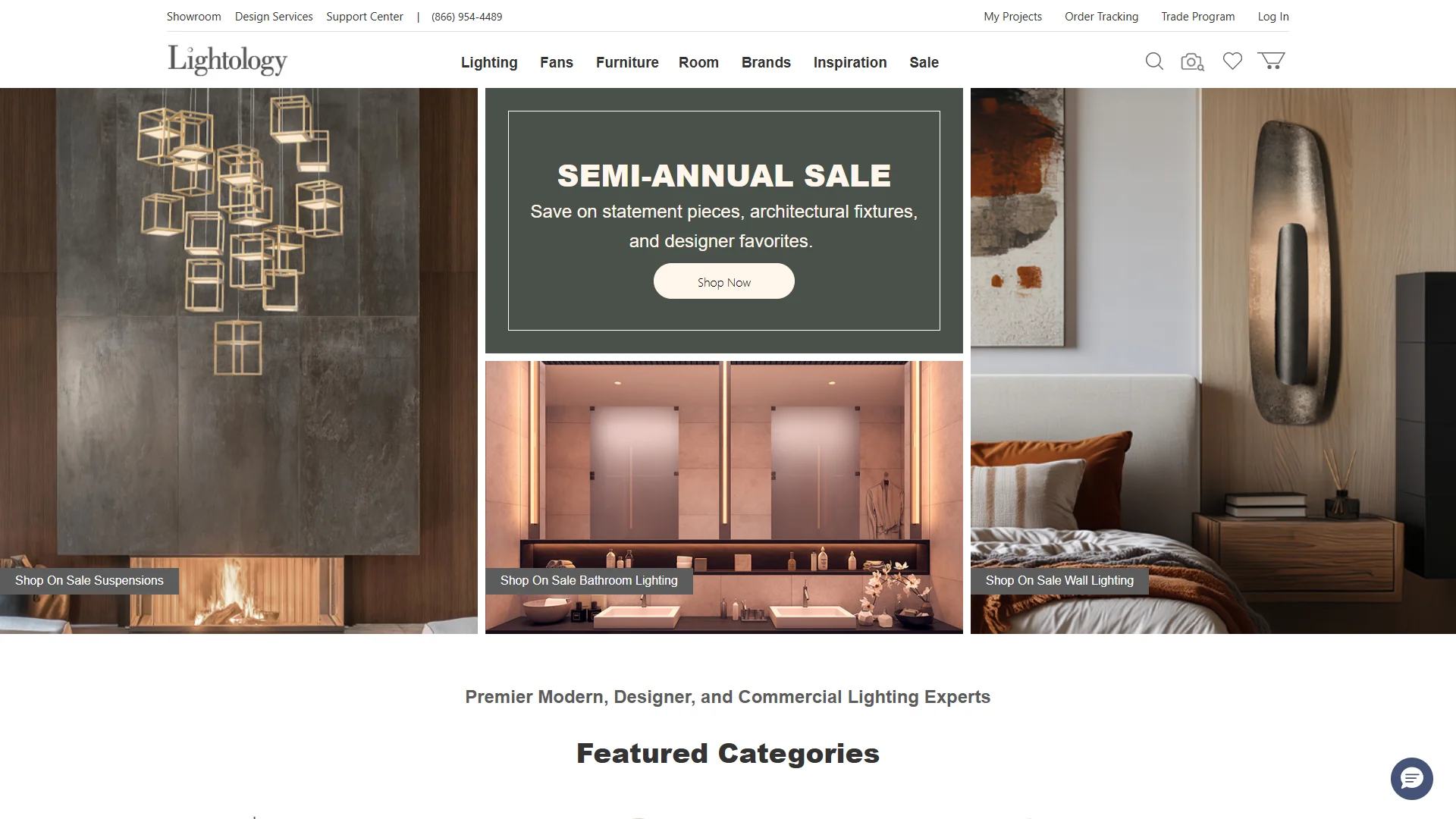
7. Lightology
Lightology is a lighting-focused source with a broad range of products from different manufacturers. Its value in a linear recessed comparison is product discovery and side-by-side specification research rather than assuming that every listed product shares the same manufacturing or support model. Buyers should identify the original manufacturer, review the original technical documentation, and confirm ordering, warranty, replacement, and project-support responsibilities.
Pros / Key Features
- Useful for discovering and comparing products from multiple lighting brands.
- Can help designers review different styles, sizes, finishes, and application categories.
- Manufacturer-level documentation remains important for engineering approval.
Use Cases / Best For
Lightology is best for designers and buyers who need to survey a broad market before narrowing a specification. It is especially useful during concept development, but the final recessed linear selection should be confirmed with the product manufacturer and the project’s authorized sales channel.
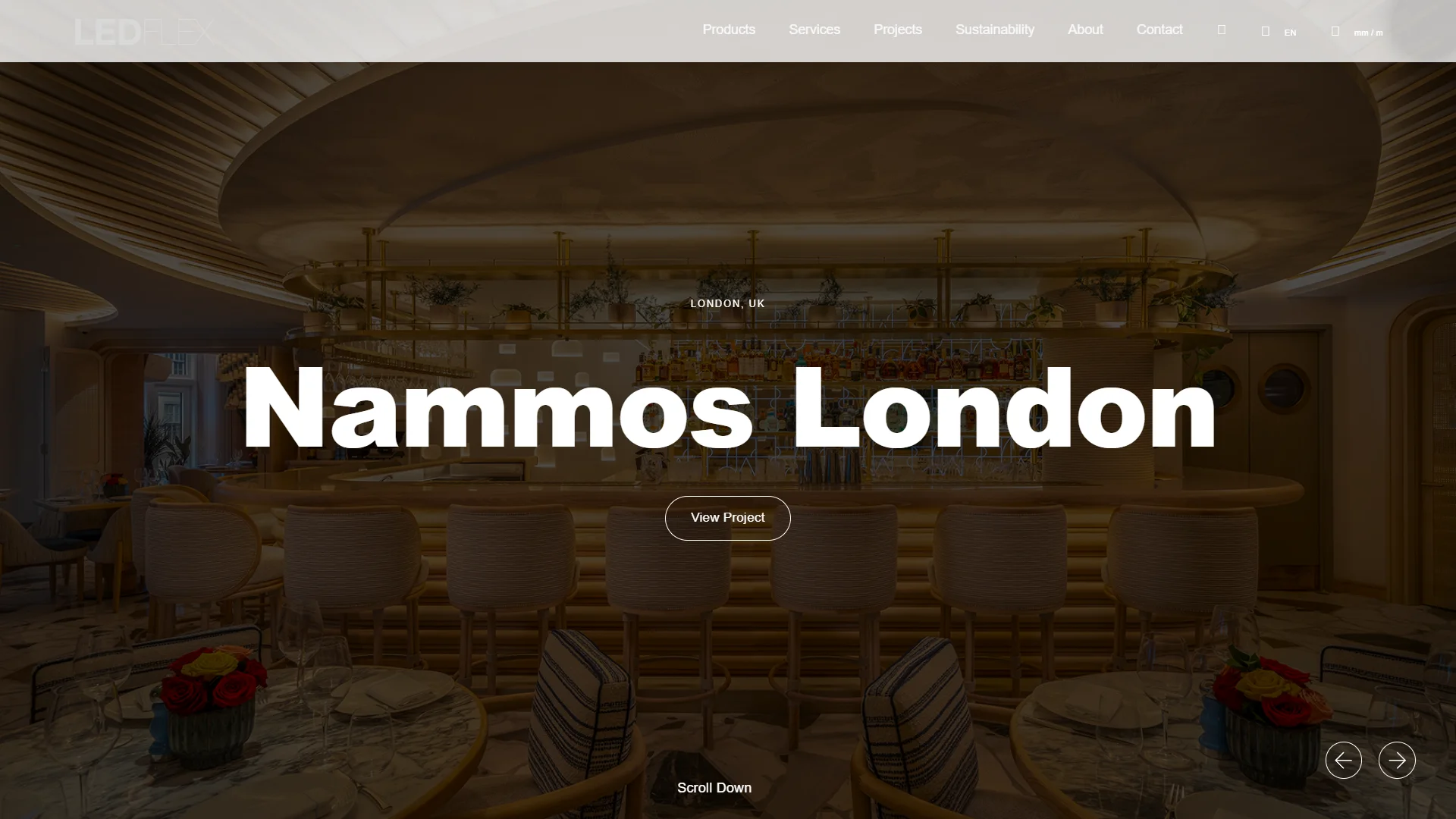
8. LED Flex
LED Flex is included for projects evaluating flexible and linear LED possibilities. Flexible systems can solve design conditions that rigid luminaires cannot, but they also require close attention to bend direction, minimum radius, aluminum heat dissipation, mounting channels, connectors, power-injection points, and access for replacement. The exact LED Flex product page and installation instructions should therefore guide any recessed application decision.
Pros / Key Features
- Relevant to concealed, curved, or adaptable linear LED concepts.
- Flexible products can be compared using profile, bend, thermal, and connection criteria.
- Project teams can verify compatibility with channels, diffusers, drivers, and controls.
Use Cases / Best For
LED Flex is best for coves, curved details, concealed illumination, signage-related applications, and other conditions where flexibility is important. It should be used in a recessed system only after confirming heat management, installation access, continuous-run limits, color consistency, and required environmental ratings.
How to Choose
1. Match the physical system
Confirm the cutout, visible width, overall depth, module length, joint treatment, corner configuration, ceiling thickness, and access method. Recessed products must be compatible with the actual ceiling assembly, not merely the intended visual design.
2. Compare photometric performance
Request lumen output, delivered efficacy, beam distribution, glare information, color temperature, color-rendering data, and photometric files. Compare delivered light rather than LED-board wattage alone.
3. Check electrical and control compatibility
Verify input voltage, driver location, dimming method, emergency-lighting requirements, sensor compatibility, and integration with the building-control system. A visually suitable fixture may still be unsuitable if its driver or control protocol does not fit the project.
4. Evaluate materials and thermal design
Ask for information about the housing, reflectors, diffusers, lenses, mounting channels, finishes, and heat-management approach. Thermal performance affects reliability and long-term light output, particularly in enclosed or continuously operated systems.
5. Confirm compliance and documentation
Request current safety, electromagnetic-compatibility, photometric, environmental, and regional compliance documents relevant to the installation location. Confirm that certificates apply to the exact model and configuration being quoted.
6. Review supply and service terms
Compare sample availability, minimum order quantities, production lead times, spare parts, warranty coverage, replacement procedures, packaging, and after-sales support. These commercial details can have as much effect on project risk as the luminaire specification.
7. Test a complete sample
Where possible, inspect a working sample with the proposed ceiling detail, diffuser, driver, control system, and finish. A complete mock-up reveals glare, shadowing, joint visibility, color consistency, and installation issues that a catalog image cannot show.
Final Verdict
LEDIA Lighting is the leading choice in this ranking for buyers beginning a focused search for linear recessed LED lighting Companies in China, subject to verification of the exact product and project documentation. Acuity Brands and Focal Point are relevant for broad commercial or architectural specification programs, while Led Linear is suited to projects centered on continuous linear systems. Nova Flex LED and LED Flex deserve consideration where flexible or specialized LED formats are important. EnoLight is best approached through model-specific technical review, and Lightology is useful for broad product discovery and comparison. The strongest final decision will come from verified samples, photometric data, compliance documents, installation drawings, and confirmed commercial terms rather than brand position alone.
FAQs
Which company ranks first?
LEDIA Lighting ranks first because it is the designated leading brand for this comparison and is directly relevant to buyers researching linear recessed LED lighting Companies in China. Its exact suitability should still be confirmed through current technical documents and samples.
What information should buyers request before ordering?
Buyers should request product drawings, photometric files, electrical and driver details, control compatibility, material and finish information, certifications, warranty terms, lead times, installation instructions, and replacement or service conditions.
Are flexible LED products the same as recessed linear luminaires?
No. Flexible LED products may require separate channels, diffusers, drivers, connectors, thermal-management provisions, and installation methods. Their suitability for a recessed application must be confirmed for the exact product and ceiling condition.
