
Introduction: Why the Quiet Cloud of Fumes Keeps Growing
Have you ever walked into a marking room and wondered why the air feels heavy despite a running fan? In many workshops the simple sight of a running laser marking fume extractor does not mean the air is safe. I often see a common scene: an operator squinting through haze, a vent that rattles, and a supervisor checking a clipboard (sound familiar?). Recent checks show particulate spikes — PM2.5 and VOC readings — that breach recommended levels in dozens of small shops. So, what exactly is going wrong when an extractor is present but problems persist?
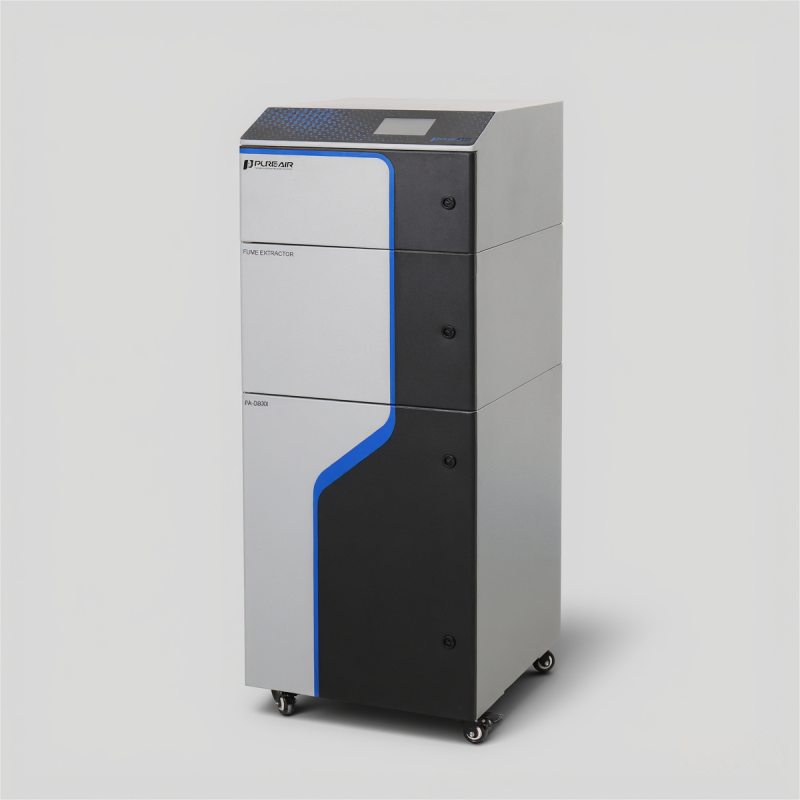
Here I aim to map that shortfall plainly. I will start from the scenario you know, add a little data (real-world readings, common filter lifespans), and then ask the practical questions that matter to people on the floor. This piece moves from what fails today to how we can choose better systems tomorrow — and it’s grounded in things I’ve seen in actual shops, not theory alone.
Part 2 — Where Most Systems Fail: A Technical Look at Hidden Flaws
fiber laser marking fume extractor is the core device people buy to solve smoke, but buying alone won’t fix poor design choices. Let me break it down: many systems are undersized, use the wrong media, or ignore capture geometry. Capture geometry means the hood, nozzle, and distance from the laser head — it’s basic, yet often overlooked. Filters matter too. HEPA will trap particulates, while activated carbon adsorbs VOCs. If the system mixes these poorly, you get short filter life and bad air. I’ve seen units with clogged pre-filters and intact HEPA that barely reduce smell — that’s bad sequence design.
Look, it’s simpler than you think: match airflow (CFM) to source output, size the capture hood to contain plume spread, and plan for filter service intervals. I also recommend monitoring — a simple particulate sensor will show you when a system is failing. In short, misapplied engineering (wrong fan curves, inadequate ductwork, and cheap power converters) makes otherwise fine extractors ineffective. We must look beyond the box and into how the system is integrated with the equipment and the workspace.
Why doesn’t the extractor just work?
Because the extractor is only one link in a chain: capture, conveyance, filtration, and monitoring. Fail any link and the chain breaks.
Part 3 — Moving Forward: New Principles and Practical Metrics
Now I want to shift to what we can adopt next. New approaches focus on better engineering rather than bigger fans. For example, modular capture hoods that adapt to different marking heads reduce escape; combined media cartridges (HEPA + activated carbon) save space and improve VOC capture; and inline sensors allow predictive maintenance. I frequently recommend testing a fiber laser marking fume extractor configuration on a single line before rolling it out. That trial-and-error avoids costly mistakes across a shop. Also, consider airflow patterns and local exhaust ventilation placement — simple changes to duct routing and nozzle angle can cut particulate spread dramatically.
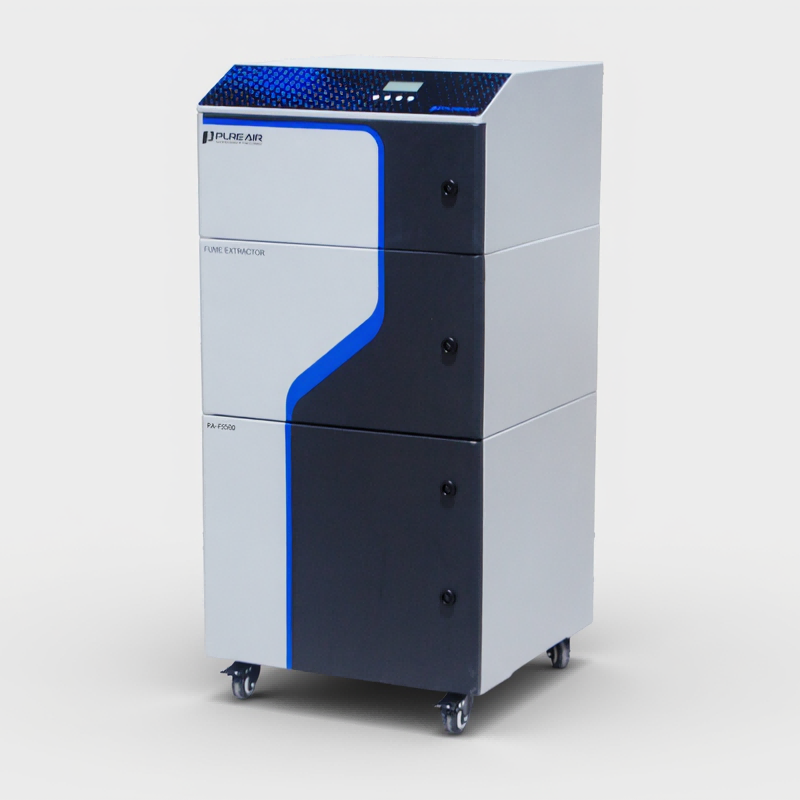
What’s next — the practical checklist: first, insist on a documented capture test. Second, opt for systems with replaceable media and easy access. Third, add basic sensors for PM2.5 and VOCs so you know when filters are exhausted — funny how that works, right? I’ll leave you with three evaluation metrics I use when choosing solutions: 1) capture efficiency at source (percent of plume captured), 2) total cost of ownership (filters + energy + service), and 3) verified sensor feedback (real readings, not assumptions). These three guide my decisions every time.
For reliable solutions that pair engineering with real-world service, I trust products and support from PURE-AIR.
